
Villa renovation is the comprehensive upgrade of a standalone home’s layout, systems, and finishes to improve safety, comfort, and long-term value. In Ras Al Khor, Dubai, Service Zone UAE coordinates villa remodeling end to end—planning, permits, and execution across AC, plumbing, electrical, painting, carpentry, tiles, SPC floors, storage, and move logistics.
By Mohammed Ali — Owner, Real Estate Specialist • Service Zone UAE
Last updated: 2026-06-11
Summary & Table of Contents
This complete 2026 guide explains villa renovation from definition to delivery. Learn why it matters in Dubai’s climate, how a project flows, the main approaches, best practices, essential tools, and real Dubai case examples—so you can plan confidently and avoid delays, rework, and disruption to family life.
Here’s what you’ll find in this guide:
- What villa renovation includes and how scope decisions affect schedule and livability
- Why upgrades to AC, plumbing, and electrical pay off in Dubai’s heat and humidity
- Step-by-step execution flow we follow at Service Zone UAE
- Four renovation approaches, with a quick comparison table
- Field-tested best practices to reduce risk and rework
- Tools, materials, and checklists our crews actually use
- Mini case studies from neighborhoods we serve
Local considerations for Oud Metha
- Schedule noisy work around school and commuting windows near Oud Metha; metro-adjacent streets can be busier around Oud Metha Metro Station.
- Plan paint and SPC flooring during cooler evenings to speed curing and reduce VOC odors; Dubai’s summer humidity demands extra ventilation.
- Delivery staging is easier using established drop zones; when possible, coordinate access near Karama Centre to streamline materials handling.
What Is Villa Renovation?
Villa renovation is the planned upgrade of a detached home’s systems, layout, and finishes to meet modern safety, comfort, and lifestyle needs. In Dubai, it spans AC, plumbing, electrical, carpentry, painting, tiles, and SPC flooring—plus permitting and logistics—delivered as a coordinated, end-to-end project.
In our experience, clear scope is everything. “Renovation” can mean anything from repainting and SPC flooring to moving walls and rebuilding mechanical, electrical, and plumbing (MEP). The right definition for you depends on goals, family routines, and tolerance for disruption.
Typical scope items we deliver
- AC services: duct cleaning, zoning, thermostat upgrades, coil care
- Plumbing: leak fixes, fixture updates, water-saving fittings
- Electrical work: extra circuits, safer panels, lighting redesign
- Carpentry: built-ins, doors, storage optimization
- Painting: low-odor paints, moisture-resistant coatings
- Tiles fixing & SPC floors: durable, easy-to-clean finishes
- Move/storage support: pack-out, secure storage, move-back
Why this matters: a scoped, end-to-end villa renovation avoids conflicts like painting before fixing leaks or installing floors before electrical upgrades—mistakes that trigger rework and delays.
Why Villa Renovation Matters in Dubai
Villa renovation in Dubai improves comfort, energy efficiency, and indoor air quality under harsh heat and humidity. Upgrading AC, plumbing, and electrical systems—paired with durable finishes—extends asset life and supports modern living for families in Oud Metha and the wider Ras Al Khor area.
Core reasons homeowners choose to renovate
- Comfort & health: better cooling, filtration, and moisture control reduce allergies and musty odors.
- Safety & reliability: updated wiring, GFCIs, and grounded circuits protect people and equipment.
- Efficiency: sealed ducts, smart thermostats, and water-saving fixtures lower resource use.
- Lifestyle fit: open kitchens, added storage, and kid-friendly layouts match how families live now.
- Value resilience: durable, water-resistant finishes (SPC floors, porcelain tiles) handle sand and humidity.
Here’s the thing: villas age from the inside out. We often see undersized AC, leaky valves, and overloaded circuits hiding behind fresh paint. Tackling systems first gives you quieter rooms, steadier temperatures, and fewer surprises when guests come over.
Signals it’s time to act
- Hot or cold spots across rooms; AC runs longer but cools less
- Discolored ceiling patches, moldy grout lines, or musty smells
- Flickering lights, warm outlets, or frequent breaker trips
- Floors cupping or grout cracking due to moisture swings
- Daily clutter due to lack of built-in storage
How Villa Renovation Works: Step-by-Step
A successful villa renovation follows a clear sequence: assess needs, define scope, plan permits, protect belongings, execute MEP-first work, finish surfaces, and hand over with documentation. Respecting dependencies avoids rework, cost creep, and unnecessary downtime.
Our end-to-end sequence
- Discovery & assessment: walkthrough, photos, measure rooms, note AC/plumbing/electrical issues, and discuss goals.
- Scope & brief: convert goals into a scope of work with priorities, materials, and phasing.
- Permits & approvals: prepare drawings, submit, and align on site rules and working hours.
- Pack-out & protection: careful packing, labeled boxes, furniture protection; optional secure storage.
- Demolition & prep: selective removal; isolate circuits and water lines; dust control and waste segregation.
- MEP rough-ins: AC ducting/returns, plumbing reroutes, added circuits, panel adjustments.
- Close-up & testing: pressure tests, insulation, duct sealing, and electrical checks.
- Finishes: tiling, SPC floors, carpentry, and painting in the right sequence.
- Finals & snagging: punch list walk-through, touch-ups, deep clean.
- Handover: warranties, photos, as-builts, and maintenance schedule.
Self-contained answer: if you only remember one thing, do systems first. Fix AC airflow and leaks before paint; add circuits before tile; then install flooring and paint last. This one change cuts downstream rework dramatically.
Types and Approaches
Villa renovations tend to follow four paths: cosmetic refresh, system-first modernization, layout reconfiguration, or full-gut overhaul. Choosing the right approach depends on comfort issues, family routines, and how long you plan to stay in the home.
Four common pathways
- Cosmetic refresh: paint, lighting swaps, minor carpentry, and hardware updates.
- System-first: AC zoning, new returns, duct sealing; plumbing fixes; electrical safety and capacity.
- Layout reconfiguration: opening kitchen walls, adding a home office, creating storage zones.
- Full-gut renovation: structural changes, new MEP throughout, and all-new finishes.
Quick comparison
| Approach | Main Goal | Best For | Key Risks |
|---|---|---|---|
| Cosmetic | Faster refresh | Staging for move-in | Masking MEP issues |
| System-first | Comfort, safety | Dubai heat & humidity | Hidden defects uncovered |
| Layout | Space efficiency | Growing families | Structural constraints |
| Full-gut | Like-new villa | Long-term owners | Permit complexity |
What most people don’t realize: many “design” problems are airflow problems. We’ve solved hot kitchens and stuffy bedrooms with returns, zoning, and sealing—before spending on walls and millwork.
Best Practices for a Smooth Project
The best villa renovations follow a documented plan, sequence work to avoid conflicts, and verify quality at each milestone. Protect belongings, communicate changes fast, and hand over maintenance guides so your upgraded villa stays performing for years.
Field-tested tips
- Write it down: a one-page brief with goals, success criteria, and must-haves.
- Sequence matters: MEP, then floors, then paint, then fixtures and hardware.
- Mockups: sample a paint wall or 2 m² of tile to confirm sheen and grout.
- Moisture control: dehumidify during summer paint and flooring cures.
- Label panels & valves: future you will thank you during maintenance.
- Document as-builts: note hidden junction boxes, rerouted pipes, and returns.
Quality control moments
- Electrical insulation resistance and RCD/GFCI checks after rough-ins
- Pressure tests for all new plumbing runs before closing walls
- AC airflow verification at supply and return grilles after balancing
- Tile lippage and grout cure checks prior to sealing
- SPC floor expansion gap verification at perimeters and thresholds
Tools, Materials, and Resources
Prioritize durable, moisture-smart materials for Dubai villas: SPC floors, porcelain tiles, low-VOC paints, marine-grade sealants, and rust-resistant hardware. Match them with pro tools—torque drivers, moisture meters, thermal cameras—to diagnose issues and deliver reliable finishes.
Material choices that last
- SPC flooring: stable under humidity, easy to clean, family-friendly.
- Porcelain tiles: low porosity; excellent for kitchens, baths, and exteriors.
- Low-VOC paints: healthier indoor air, faster re-occupancy.
- Silicone & epoxy grouts: resist mold and reduce maintenance.
- Rust-resistant hardware: hinges, screws, and fixtures that won’t pit.
On-site diagnostics are how we catch silent problems. Thermal cameras reveal duct leaks; moisture meters find wicking behind baseboards; outlet testers flag miswired circuits. Fixing root causes protects your finishes.
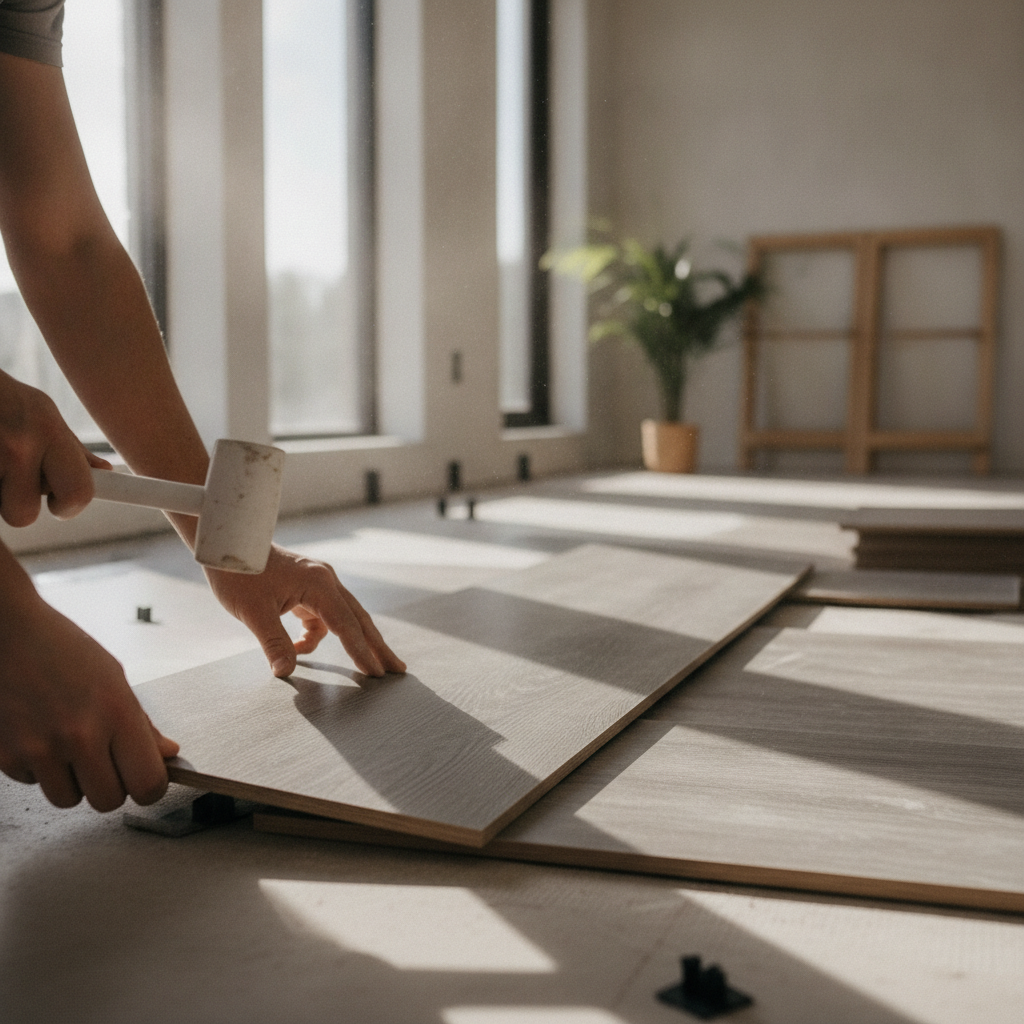
Crew tools we rely on
- HEPA vacuums and zip walls for dust control
- Laser levels for cabinetry and tile layout accuracy
- Torque-limited drivers for outlet and switch plate installs
- Moisture meters for subfloor and wall checks before finishes
- Thermal imagers for AC duct and insulation troubleshooting
For deeper design inspiration and process checklists, see these established renovation resources with practical planning insights on full-home renovation, a concise overview of kitchen and bath planning, and a Dubai-focused villa design case study.

Case Studies and Real Examples in Dubai
Small system fixes often unlock big comfort gains. Our Dubai projects show how AC zoning, leak remediation, electrical safety, and durable finishes—executed in the right order—deliver quieter rooms, steadier temperatures, and lower maintenance across busy family homes.
Oud Metha family: nursery + SPC floor
- Challenge: nursery ran warm with afternoon sun; rugs trapped dust.
- Actions: added return grille, sealed ducts, installed SPC flooring, and used low-VOC paint.
- Result: steadier temps and easier cleaning; nap times improved with less AC cycling noise.
Arabian Ranches villa: AC zoning + plumbing refresh
- Challenge: upstairs too hot, showers lost pressure, frequent drips at valves.
- Actions: created a second zone, balanced airflow, replaced cartridges and supply hoses, added shutoffs.
- Result: comfortable nights, reliable showers, fewer service calls.
Downtown townhouse: storage + move coordination
- Challenge: tight schedule, no on-site storage during flooring and paint.
- Actions: pack-out, secure storage, phased SPC install, repaint by floor.
- Result: zero damage and clear pathways for crews; faster handover.
When working with families in Dubai, we’ve found three habits matter most: protect what you keep, phase work so life can continue, and document as you go. These habits reduce stress and set up smooth maintenance later.
Need help planning your villa renovation? Our multi-trade team handles AC, plumbing, electrical, painting, carpentry, tiles, SPC flooring, packing, storage, and move-back—coordinated under one project lead. Share your goals and timeline, and we’ll map a practical sequence.
Frequently Asked Questions
Homeowners ask about timelines, whether they must move out, permits, and how renovation differs from remodeling. Clear scope, phasing, and MEP-first sequencing keep projects predictable and reduce the need to vacate entirely.
How long does a villa renovation usually take?
It depends on scope and phasing. Cosmetic refreshes can be completed faster, while system-first or layout changes naturally take longer. Projects run more predictably when plans are documented, materials are confirmed early, and work is sequenced MEP → floors → paint → fixtures.
Do we need to move out during renovation?
Not always. Many villas can be renovated in phases so families stay in parts of the home. Pack-outs, dust control, and clear work zones make living on site possible. For major system work or full-gut projects, a temporary move-out is often more comfortable.
What permits or approvals are involved in Dubai?
Structural changes and certain MEP alterations generally require drawings and approvals. Community rules may also set working hours and noise limits. A documented scope and early coordination keep paperwork smooth and avoid last-minute delays.
What’s the difference between renovation and remodeling?
People use the words interchangeably. We treat “renovation” as improving systems, finishes, and function, and “remodeling” as modifying layout or structure. Many villa projects do both—system upgrades for comfort and targeted layout changes for storage or open living.
Key Takeaways
Sequence drives success. Solve AC, plumbing, and electrical first; then build beautiful finishes. Protect what you keep, phase the work so life can continue, and document everything for easier maintenance later.
- Define goals and write a one-page brief
- Do MEP first, finishes last
- Use moisture-smart materials (SPC, porcelain, low-VOC)
- Plan pack-out, storage, and move-back
- Document as-builts and maintenance tasks
Conclusion & Next Steps
A well-planned villa renovation delivers quieter rooms, steadier temperatures, and finishes that last—without derailing family life. Start with scope and sequencing, then phase the work and protect what matters. The result is a villa that’s easier to live in and simpler to maintain.
- Walk your villa and note comfort, safety, and function gaps
- Prioritize system fixes; shortlist materials suited to Dubai’s climate
- Decide whether to phase work to stay on site or plan a short move-out
- Assemble documents you’ll need for approvals and community rules
- Set a target handover date and align all trades to it
Ready to renovate in Ras Al Khor or nearby Oud Metha? Share your goals and schedule preferences. Our coordinated team can handle the AC, plumbing, electrical, carpentry, painting, tiles, SPC floors, packing, storage, and move-back in one integrated plan.