
Cargo shipping from Dubai is the end-to-end movement of household goods or office equipment by sea, air, or multimodal routes through the UAE’s logistics hubs to overseas destinations. It includes export packing, customs paperwork, carrier handoff, and destination delivery. From Ras Al Khor, Service Zone UAE coordinates packing, storage, and handover so international moves stay organized.
By Mohammed Ali — Owner, Service Zone UAE
Last updated: 2026-05-06
Overview: Cargo Shipping from Dubai (2026)
Plan cargo shipping from Dubai by mapping your volume, choosing air or sea, preparing documents, and scheduling export packing. Align dates with building access and holidays. Well-timed packing, clear paperwork, and mode selection reduce transit time, limit damage risk, and keep your relocation on schedule.
Here’s the thing: most stress in overseas moves comes from timing gaps and unclear paperwork. Our team in Ras Al Khor solves that by sequencing packing, storage, and carrier handoffs around your handover dates.
- What you’ll learn in this guide:
- How cargo shipping works end-to-end from Dubai, with household examples
- When to choose air freight vs. ocean freight (LCL/FCL) for relocations
- Documents, customs, and insurance basics for smoother clearance
- Export packing, crating, and storage tactics that prevent damage
- Local timing tips for Ras Al Khor and greater Dubai
- Table of contents
- What is cargo shipping from Dubai?
- Why it matters for households and offices
- How the process works (step-by-step)
- Modes and methods (air, ocean, multimodal)
- Best practices to reduce risk
- Tools and resources
- Case studies and examples
- FAQ
- Key Takeaways
- Conclusion & Next Steps
What Is Cargo Shipping from Dubai?
Cargo shipping from Dubai is the structured movement of goods internationally via air or sea, supported by packing, documentation, customs clearance, and destination delivery. For personal effects, movers create an inventory, issue an airway bill or bill of lading, and coordinate final-mile delivery through destination agents.
In our experience supporting families and offices across Dubai, “cargo shipping” becomes clear once you see the moving pieces:
- Export packing and crating: Items are wrapped, cushioned, and crated to withstand stacking, vibration, and humidity.
- Paperwork: A packing list, passport copy for personal effects, and any permits support customs entry abroad.
- Main carriage: Goods fly as air cargo for speed or sail in shared (LCL) or full (FCL) containers for capacity.
- Insurance: All-risk policies cover handling and transit exposures door-to-door.
- Destination handling: A vetted agent clears and delivers to your new home or office.
For relocations, we often blend services: export packing in Ras Al Khor, temporary storage, and carrier handoff. Those steps keep moves orderly—even when leases or utility setups shift at the last minute.
Why Cargo Shipping Matters in Dubai Relocations
Coordinated cargo shipping minimizes delays, breakage, and downtime. Aligning export packing, carrier schedules, and building access helps households settle faster and keeps offices productive. When logistics and moving services work together, relocations feel predictable and low-stress.
Why does this matter to you? Because small misalignments create outsized headaches. A missed elevator slot, a missing document, or mismatched delivery timing can ripple into days of delay.
- Business continuity: Office moves that time delivery to weekends reduce disruption and employee downtime.
- Damage prevention: Export-grade cushioning and moisture barriers limit shock and humidity exposure.
- Customs efficiency: Clean, consistent documents reduce questions and shorten clearance windows.
We connect these dots through our international moving framework, which maps packing, storage, and carrier bookings against your key dates. For UK-bound households, see our UK–Dubai relocation article for the reverse route considerations.
How the Process Works: Step-by-Step
Measure your volume, choose the mode, prepare documents, and lock dates. Then export-pack and crate, hand off to the carrier, track customs, and schedule destination delivery. This sequence turns a complex relocation into clear, manageable milestones.
End-to-end workflow (household or office)
- Pre-move survey: We measure volume in cubic meters (CBM), flag fragile items for crating, and confirm access constraints.
- Mode & timeline: Air for speed-sensitive essentials; sea (LCL/FCL) for the bulk. Align with building access and holiday calendars.
- Export packing: Use export-grade cartons, corner guards, moisture barriers, and custom crates for art or stone.
- Carrier handoff: Receive an airway bill (AWB) or bill of lading (BL). Confirm Incoterms (e.g., DAP or DDP) with stakeholders.
- Customs & transit: Submit documents; monitor routing. Keep originals accessible for destination checks.
- Destination delivery: The local agent schedules delivery, unpacks, and removes debris; we reconcile inventory.
Want a deeper playbook? Our packing and moving services guide breaks down materials, labeling, and room-by-room strategies.

Local considerations for Ras Al Khor
- Plan loading bay and elevator bookings early. Missed slots often push moves by days during busy periods.
- Account for peak heat and holiday calendars. Early morning pack-outs reduce fatigue and protect heat-sensitive items.
- Coordinate temporary storage if lease dates, visas, or utility activations don’t align with ship or flight schedules.
Modes and Methods: Air, Ocean, and Multimodal
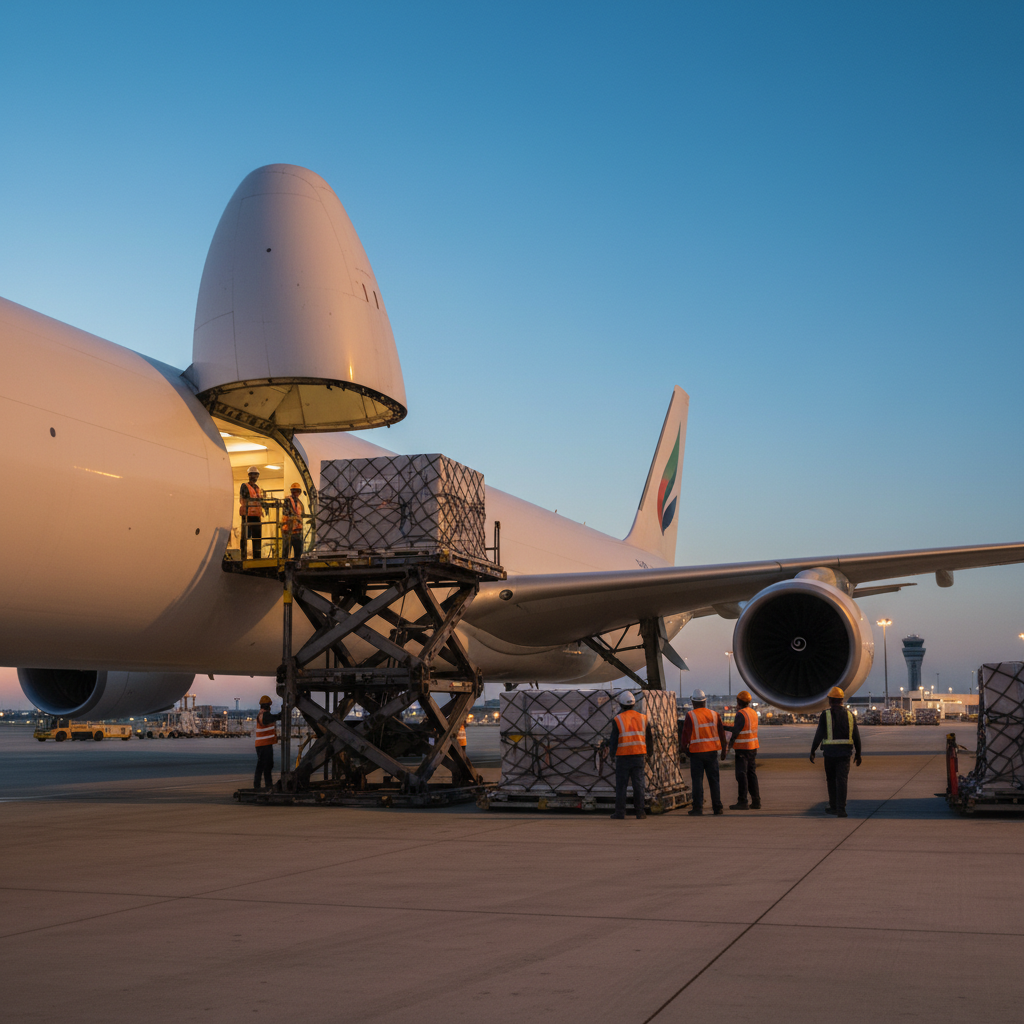
Choose air freight for speed and small, high-value shipments; choose ocean LCL for mid-volume moves and FCL for whole households. Multimodal options combine truck, sea, and air to match timelines, capacity, and routing flexibility.
Air freight (fastest)
- When it fits: Urgent personal effects, IT equipment, or high-value items.
- Chargeable weight: Often calculated using the volumetric formula (L × W × H ÷ 6000 in cm).
- Typical transit: Many lanes deliver within 2–7 days, excluding customs.
Ocean freight
- LCL (Less than Container Load): Share container space for ~5–15 CBM; flexible but includes consolidation steps.
- FCL (Full Container Load): 20’ ≈ 33 CBM; 40’ ≈ 67 CBM; 40’ HC ≈ 76 CBM—common for full households or office floors.
- Transit windows: Many global lanes complete within ~20–45 days port-to-port, then add last-mile handling.
Multimodal strategies
- Hybrid moves: Send essentials by air and bulk by sea to balance speed with capacity.
- Storage bridge: Use short-term storage in Dubai to sync handover dates and delivery windows abroad.
- Sequenced delivery: Stage critical equipment first so teams can start work while the rest follows.
| Mode | Best for | Speed | Typical Volume | Notes |
|---|---|---|---|---|
| Air Freight | Urgent, high-value, small shipments | Fastest | 1–5 CBM | Volumetric weight applies; check DG rules |
| LCL Ocean | Mid-size personal effects | Moderate | 5–15 CBM | Shared container space; consolidation time |
| FCL 20’/40’/40’HC | Whole households or offices | Moderate | 33–76 CBM | Direct control, less handling |
| Multimodal | Balanced speed/capacity | Varies | Flexible | Combine air + sea + truck by need |
Best Practices to Reduce Risk
Protect your shipment by using export-grade packing, moisture barriers, and custom crating for fragile items. Keep documents consistent, book building access early, and label room destinations. Choose Incoterms that match your control and paperwork preference.
Export packing that actually works
- Shock and vibration control: Double-wall cartons, foam-in-place, and corner guards protect edges and glass.
- Moisture management: Desiccants and barrier films reduce condensation in ocean transit.
- Custom crates: ISPM-15 stamped wood and floating bases protect art, marble, and electronics.
Paperwork discipline
- Consistent descriptions: Item names and quantities must match across packing lists and declarations.
- Keep originals handy: Passports and key receipts should travel with you, not inside boxes.
- DG awareness: Some batteries and chemicals follow restricted air transport rules.
Operational timing
- Elevators and loading bays: Book early; missed windows often trigger re-delivery or storage moves.
- Staggered deliveries: For offices, prioritize IT and workstations first, then furniture.
- Storage buffers: Bridge timing gaps when visas, leases, or utilities don’t align.
For packing deep-dives, explore our house shifting tips and our movers and packers insights.
Tools and Resources (Checklists, Templates, Calculators)
Use volume calculators, export packing checklists, and DG reference lists to plan your shipment. Templates ensure nothing is missed, from utility shutoffs to pet travel. A simple spreadsheet timeline keeps handovers, flights, and deliveries aligned.
- Volume calculator: Estimate CBM to compare air vs. ocean and pick LCL or FCL.
- Packing checklist: Label by room; color-code fragile and high-priority cartons.
- DG quick check: Identify restricted or special-handling items before you choose air.
- Handover timeline: Map pack-out, storage, ship/flight ETD, and destination delivery on one page.
- Insurance notes: All-risk, door-to-door coverage for declared items and values.
If you prefer a done-for-you plan, our international moving service page outlines how we coordinate carriers with export packing for households and businesses.
Case Studies and Examples (Service Zone UAE)
Real moves succeed when logistics match life events. These Dubai examples show how blending air and sea, plus storage, keeps relocations predictable—even when dates change late.
Ras Al Khor apartment to London (family of three)
- Profile: 9 CBM personal effects; fragile art and kitchenware.
- Approach: LCL ocean for bulk; one air carton with essentials for the first week.
- Tactics: ISPM-15 crates, desiccants, and photo inventory; lease start synchronized with delivery.
Dubai office IT refresh (SME)
- Profile: One 40’ HC container of workstations, racks, and seating.
- Approach: Weekend export pack; FCL for direct control and less handling.
- Tactics: Antistatic wraps, staggered delivery to rebuild IT first; employees returned Monday with minimal downtime.
Storage bridge for visa timing
- Profile: New job offer abroad; house handover before visa issuance.
- Approach: Export-pack, place in secure storage, then release to next available vessel after visa approval.
- Outcome: No rush decisions; smooth, documented chain of custody from pack-out to final delivery.
For more planning context, see our move-out timeline guide and our office moving planning article.
Frequently Asked Questions
Households and offices ask about documents, mode choice, customs, and restricted items. Keep records consistent, choose air for speed-sensitive essentials, and check destination rules early to avoid last-minute surprises.
What documents do I need for cargo shipping from Dubai?
For personal effects, you typically need a detailed packing list, passport copy, and destination contact details. Commercial moves need an invoice and HS codes. Keep descriptions consistent across all forms to reduce customs questions and clearance delays.
Is air or sea better for household goods?
Air is faster and makes sense for essentials or high-value items. Ocean (LCL/FCL) fits larger volumes and full households. Many families split shipments—air for immediate needs, sea for furniture and bulk—to balance speed and capacity.
How do customs duties work at destination?
Duties and taxes are assessed by the destination authority based on HS codes and item descriptions. Provide clear, accurate lists and keep receipts for new items. Some countries offer concessions on used personal effects when documentation is complete.
What items are restricted or require special handling?
Lithium batteries, pressurized containers, certain chemicals, and some food items may be restricted—especially by air. Flag these during the survey so we can choose compliant packing and an appropriate mode or obtain permits when needed.
Key Takeaways
Sequence your relocation: survey, mode choice, documents, export packing, carrier handoff, clearance, and delivery. Use storage as a timing bridge and label everything by destination room. Splitting air and sea can keep life moving even while bulk cargo is in transit.
- Start planning backward from your handover date.
- Pick the mode that matches your volume and urgency.
- Export-grade packing prevents shock and moisture damage.
- Keep documents consistent to speed clearance.
- Use short-term storage to bridge visa, lease, or utility gaps.
Conclusion & Next Steps
Cargo shipping from Dubai becomes simple when tasks are sequenced and dates align. If you want a coordinated plan, we can survey, pack, store, and manage carrier handoffs from Ras Al Khor so your family or office lands smoothly abroad.
- Need a checklist, survey, or storage bridge? Explore our movers and packers overview.
- Prefer us to manage everything? Review our international moving service.
- Ready to map dates? Skim our packing and moving guide and contact us for a quick survey.
Get a coordinated plan. Book a free survey window and we’ll align packing, storage, and carrier bookings with your handover. Service Zone UAE — based in Ras Al Khor — supports households and offices across Dubai.