
Local moving services are professional solutions that plan, pack, transport, and set up your home or office within the same metro area. In Ras Al Khor, Dubai, Service Zone UAE coordinates building rules, skilled crews, and protective materials to deliver a same-day move with minimal downtime and no guesswork.
By Mohammed Ali | Last updated: 2026-05-13
Above-Fold Section
Book local movers who handle planning, packing, transport, and setup end to end. In Dubai, the best teams coordinate building approvals, elevator slots, and access routes so your belongings travel safely and arrive exactly where you want them—ready to live or work the same day.
Moving across Dubai shouldn’t steal your week. This complete, service-focused guide shows how Service Zone UAE delivers fast, careful moves from Ras Al Khor to any district while protecting floors, walls, and valuables. You’ll see the process, tools, checklists, and pro tips our crews use every day.
- What local moving includes (and what it doesn’t)
- How a professional move runs—from survey to final walk-through
- Packing methods that prevent damage and speed unpacking
- Storage options when timelines don’t align
- Permits, building rules, and seasonal timing in Dubai
- Checklists, templates, and best practices you can use today
Summary: At a Glance
Local moves work best with a clear inventory, building approvals, labeled boxes, and a crew scheduled to match elevator slots. Service Zone UAE manages these details, assigns the right truck and team, and finishes with a room-by-room placement check so you start day one without delays.
Here’s the core idea: logistics beat muscle. We reduce idle time by aligning loading with elevator cycles, use protection on every surface, and set up essential rooms first. That’s how a same-city relocation becomes a same-day start—no box hunting at midnight.
Local considerations for Ras Al Khor
- Reserve building elevators and loading zones early; popular Dubai buildings fill weekend slots fast.
- Beat the heat: morning departures reduce exposure. Keep staging areas near 72–76°F (22–24°C) for crew comfort and item safety.
- City events and rush windows can extend trips; plan buffer time for cross-city routes.
What Is Local Moving (Dubai)?
Local moving in Dubai is a same-metro relocation service that packs, transports, and sets up your home or office within city limits. It includes planning, protective packing, safe loading, secured transport, and complete placement—with building rules and elevator reservations handled for you.
For Service Zone UAE, local moving services mean end-to-end handling: survey, professional packing, careful loading, insured transport, and precise placement. Our team works from Ras Al Khor and serves all Dubai districts, supporting apartments, villas, and offices with right-sized crews and purpose-built materials.
Need broader context beyond city limits? Explore our moving services hub for the full scope of local, office, and international moves.
Why Local Moving Matters in Dubai
Local moves succeed when logistics match building policies and environmental realities. Coordinated elevator slots, protective coverings, smart box labeling, and heat-aware scheduling reduce damage risk and shorten total move time so you get back to normal the same day.
Dubai buildings often require move permits, elevator bookings, and lobby protection. Skipping one step can delay access and strain crews. We synchronize your schedule with building windows, assign the right truck size for access points, and pad high-touch surfaces for safe passage throughout the move path.
Summer moves benefit from earlier starts and climate-controlled staging. Heat-aware planning keeps finishes and electronics safe. For safe work in hot conditions, NIOSH heat guidance outlines proven practices that also support careful moving.
How Local Moving Works: Step-by-Step
A professional local move follows a defined workflow: pre-move survey, plan and materials, pack and label, protect the building, load by zones, secure transit, room-first unload, and a final walk-through. Each phase is tracked so nothing is missed.
Here’s the operational sequence our crews follow for local moving services in Dubai. Use it as your checklist and as your standard when comparing providers.
| Phase | Actions | Output |
|---|---|---|
| 1) Pre-move survey | Video or on-site tour; inventory; access checks; elevator rules | Accurate scope, truck size, crew plan, materials list |
| 2) Move plan | Timeline, building approvals, elevator slots, route and buffer | Confirmed schedule and approvals |
| 3) Packing day | Room-by-room boxing; fragile wrapping; furniture disassembly | Labeled, protected items ready for loading |
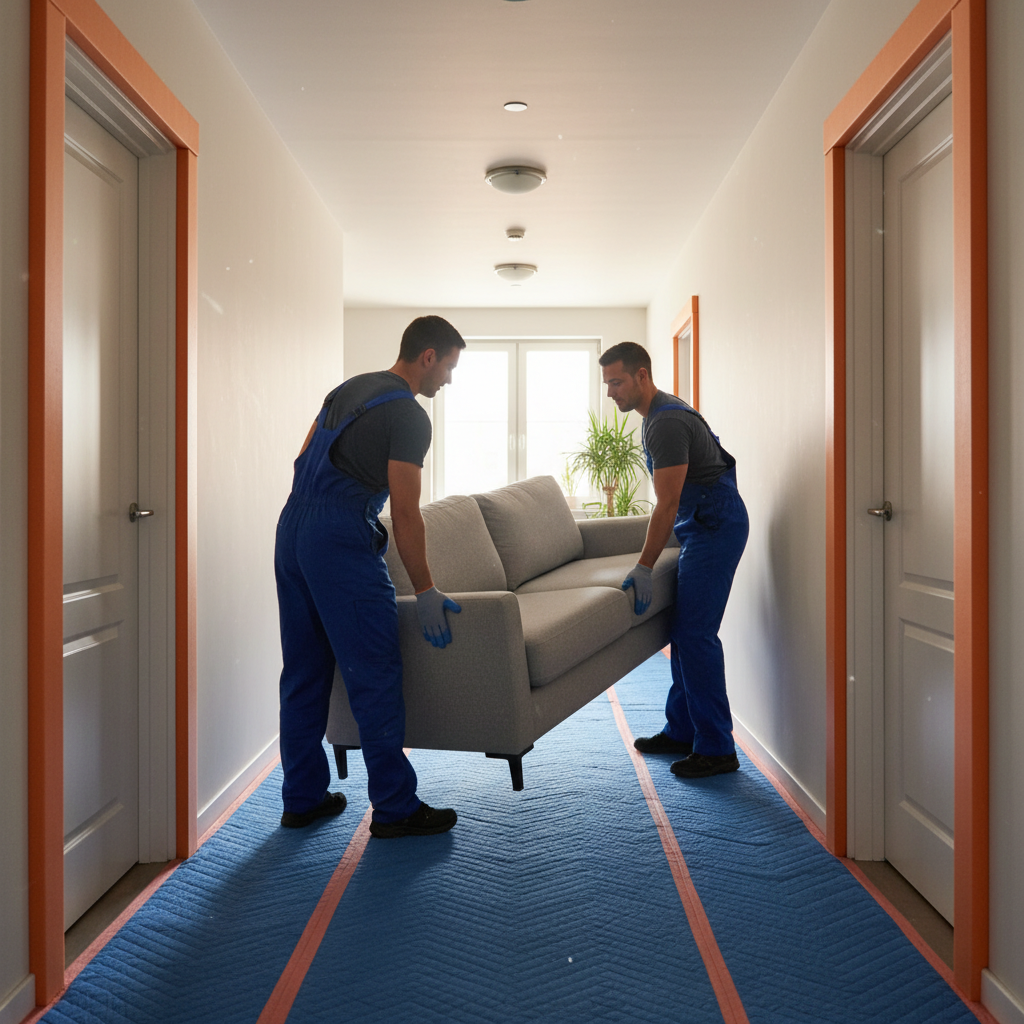
| 4) Site protection | Floor runners; door-frame pads; elevator padding | Damage prevention in common areas |
| 5) Loading | Heaviest first; stack by destination room; tie-downs | Balanced truck; items secured for transit |
| 6) Transport | Planned route; real-time traffic checks; secure parking | On-time arrival at destination |
| 7) Unloading | Room-first sequencing; furniture reassembly; placement | Functional rooms and walkways fast |
| 8) Final check | Inventory match; debris removal; sign-off | Move complete and verified |
Want us to run this plan for you? Visit our dedicated local moving page or see residential moving strategies for home-specific planning.

Types of Local Moves and Methods
Local moves vary by property type, access, and handling needs. Apartments demand elevator timing and compact gear; villas add driveway distance and outdoor staging; offices require IT decommissioning, labeling systems, and weekend cutovers to avoid downtime.
Homes and apartments
Home moves are about sequence and protection. Apartments require advance elevator bookings, hallway padding, and compact carts. Villas add distance from truck to door and space for staging. Both benefit from double-wall cartons, wardrobe boxes, picture cartons, and mattress bags that stop punctures and dust.
- Apartment focus: Elevator windows, compact dollies, quiet-hours awareness.
- Villa focus: Larger truck access, multiple entry points, shaded staging zones.
- Materials: Wardrobe boxes keep clothing crease-free; TV boxes protect screens.
Office and commercial
Commercial moves prioritize uptime. We map desks, number crates, and coordinate IT. Printers, meeting rooms, and reception stand up first so teams can work while we finish placement. Security and facilities approvals keep loading and unloading predictable.
- IT protection: Monitor sleeves, CPU crates, and cable bags labeled by desk number.
- Sequencing: Department-first unloading; critical rooms first.
- Timing: Evening or weekend cutovers to hit Monday start times.
Special handling
Some items need bespoke methods. Pianos and safes use skids, ramps, and team lifts. Fine art and glass benefit from picture boxes, corner guards, and foam-in bagging. Appliances may require qualified disconnects for gas and electrical—our multi-trade team can coordinate these safely.
- Large items: Pianos, safes, gym machines, and oversized decor.
- Fragile pieces: Artwork, mirrors, and stone tops with edge protection.
- Appliances: Transit bolts for washers; gas lines secured by qualified technicians.
Coordinating a mixed move (home plus office)? Our office moving guide explains cutover planning and IT crate labeling for seamless Monday go-lives.
Best Practices that Prevent Damage
Protect surfaces, pack by weight, and label for the destination room. Use door-frame pads, floor runners, and moving blankets; put heavy items in small boxes; number boxes and list the contents so you can place, assemble, and start living the same day.
Best practices turn chaos into clarity. Labeling on two sides and the top makes stacks readable. Heavy items belong in smaller cartons to keep boxes liftable and intact. Stretch wrap teams with blankets to shield wood and leather. A simple essentials box lets you function before the last carton is unpacked.
- Room-first labeling: Mark two sides and the top with room plus key contents.
- Weight control: Books, tools, and canned goods go in small cartons.
- Electronics: Use original boxes when available; static-safe sleeves otherwise.
- Beds and wardrobes: Disassemble to major parts; bag and label hardware.
- Essentials box: Chargers, basic tools, medications, snacks, and linens.
- Photo inventory: Quick photos help track condition and reassembly.
In buildings that require move permits, your plan should include lobby mats, corner guards, and elevator padding. We handle these protections and document before/after condition for compliance and clarity with building management.
Tools and Resources We Use (and You Can Too)
The right tools speed the move and prevent injuries: four-wheel dollies, shoulder straps, neoprene gloves, and door-frame pads. Pair them with a room-coded label kit and a shared checklist so everyone knows what’s next.
Tools reduce risk and make every step repeatable. Dollies protect backs and floors. Pads keep walls pristine. We organize each job with a digital checklist and a room map that guides placement so the kitchen, bathrooms, and bedrooms come online first.
- Protective gear: Floor runners, corner guards, door-jamb pads, blankets.
- Moving aids: Appliance dollies, piano skids, forearm lifting straps.
- Packing kit: Bubble wrap, packing paper, heavy-duty tape, specialty cartons.
- Coordination: Digital checklists and shared room maps for the crew.
- Heat safety: Hydration coolers and shift planning; see heat-stress best practices.
For long renovations or cross-border timelines, pair your move with secure staging. Our cargo shipping overview explains how storage supports predictable handovers.
Case Studies: Real Dubai Moves We’ve Delivered
Efficient local moves come from disciplined planning. These anonymized snapshots from Service Zone UAE show how right-sized crews, proper protection, and smart sequencing shaved hours off move days while protecting finishes and furniture.
Apartment-to-apartment, same district
Challenge: One service elevator and strict weekend windows. Approach: Staggered packing day; early-morning load; elevator padding and lobby covers. Outcome: Essentials unpacked by mid-afternoon; no building violations recorded, and hallways remained open for residents.
Villa to villa with storage hold
Challenge: Handover gap required interim storage for furniture and appliances. Approach: Two-phase move with itemized storage intake and humidity-aware wrapping. Outcome: Seamless redelivery and same-day placement by room map without missing items.
Office cutover over a weekend
Challenge: Thirty-workstation floor with a Monday 9 a.m. go-live. Approach: Pre-labeled IT crates, desk-number map, and printer-first plan. Outcome: Teams logged in on time with desks, screens, and meeting rooms ready.
Permits, Rules, and Risk Control
Most Dubai buildings require move approval and elevator bookings. Compliance avoids access delays. Pair approvals with site protection and clean documentation to safeguard both your belongings and the building throughout the move.
Think in terms of effort and complexity. Bedroom count, special items (like pianos or safes), elevator access, and weekend restrictions all affect planning. Add-ons such as short-term storage or specialty packing change timelines and crew mix—your survey captures these details for a precise plan.
Ready for a tailored plan? Start on our local moving services page or our moving service overview.
Checklists and Templates You Can Use
Use concise, room-first lists. Build a 30-day countdown, a packing order, and a move-day essentials list. Share these with your family or team so everyone knows what’s next and what’s already done.
30-day countdown
- Day 30–21: Survey, approvals, declutter, order supplies.
- Day 20–11: Pack off-season items; confirm elevator slots.
- Day 10–4: Pack bedrooms and decor; stage kitchen basics.
- Day 3–1: Defrost fridge, unplug non-essentials, prepare essentials box.
- Move day: Protect floors, confirm labels, walk through both sites.
Packing order
- Least-used rooms first; daily-use rooms last.
- Heavy items in small boxes; light items in large boxes.
- Plates vertical in dish boxes; glasses in cell kits.
Office handover kit
- User label map; desk number plan; printer-first setup.
- Network change notes; monitor sleeves and zip-ties.
- Weekend cutover timeline and emergency contacts.
Move-Day Timeline (Hour by Hour)
A clear timeline keeps everyone aligned: arrive and protect, load in zones, transit with buffers, room-first unload, reassemble, and verify. When crews and elevators run on the same clock, moves finish on time with fewer surprises.
Here’s a typical single-day sequence for a two- to three-bedroom apartment in Dubai. Adjustments depend on elevator windows and access distances, but the cadence stays consistent when the plan is tight.
- 07:30–08:00: Crew arrives; site protection installed; box labels checked.
- 08:00–10:00: Priority rooms packed and staged; large furniture wrapped.
- 10:00–12:00: Loading by zone to match destination rooms; inventory confirmed.
- 12:00–13:00: Transit with route buffer; secure parking at destination.
- 13:00–15:00: Unloading room-first; reassembly starts (beds, desks, tables).
- 15:00–16:00: Kitchen and bathrooms set to functional; debris consolidated.
- 16:00–17:00: Final walk-through; adjustments; sign-off.
Quality Control Metrics We Track
We measure what matters: schedule adherence, damage-free rate, reassembly accuracy, and first-room readiness. These metrics keep crews focused on outcomes you feel immediately—like sleeping in your own bed the first night.
In our experience, on-time elevator cycles and accurate labeling correlate with shorter total move times. We also log before/after site photos, item counts by room, and tool usage so every step is auditable. That accountability translates into predictable, repeatable results for families and offices.
- Damage-free rate: Documented condition before and after, with protective materials tracked.
- Schedule adherence: Variance to elevator slot windows and transit buffers.
- First-room readiness: Bed assembled, bathroom stocked, kitchen functional.
- Placement accuracy: Room map vs. final layout, noted during sign-off.
Sustainability and Waste Handling
Smart moving reduces waste: right-size boxes, reusable blankets, and carton take-back. Organize donations and recycling before move day to avoid last-minute trash runs and overflowing hallways.
We minimize single-use materials by prioritizing blankets and reusables. Where cartons are necessary, we encourage right-sizing and planned reuse. Donating usable items before move day reduces truckloads and clutter at the destination, making setup faster and cleaner.
- Reuse first: Moving blankets, straps, and pads reduce single-use plastics.
- Right-size cartons: Fewer half-empty boxes mean safer stacks and fewer trips.
- Plan donations: Schedule pickups for furniture and clothing you won’t move.
Let’s Plan Your Dubai Move
Get a quick, accurate plan with a 15-minute survey. We’ll map inventory, access, timing, and protections so your move runs on rails—then handle every detail on the day.
Talk to our Ras Al Khor team about your timeline and building rules. We’ll shape a practical plan and assign the right crew and truck size so nothing is left to chance. Start here: local moving services or visit our moving services hub.
Frequently Asked Questions
Plan 30 days out, reserve elevators early, and label every box by room. A professional team handles packing, loading, and placement while protecting both buildings. Here are concise answers to common questions we hear in Dubai.
How far in advance should I book a local move?
Two to four weeks is ideal, especially if your building requires elevator bookings. For peak weekends, earlier is better. We can still help on shorter notice when schedules allow—a quick survey locks in the right crew and truck size.
Do movers pack everything, or should I pack myself?
We offer full packing, partial packing, or transport-only for self-packed boxes. Fragile items, electronics, and glassware benefit from professional packing. If you DIY, use sturdy boxes, heavy-duty tape, and label two sides plus the top by destination room.
How do you protect my building during the move?
We install floor runners, door-frame pads, and elevator padding before moving anything. We also stage items to keep hallways clear and document condition before and after. This satisfies building policies and prevents scuffs and scratches.
What happens if my move-in date and move-out date don’t match?
Use short-term storage. We intake with itemized lists, wrap for humidity, and redeliver by room map when your keys are ready. This keeps your current place clear and your next space organized for a fast setup.
Can you handle office moves in the same service?
Yes. Our office teams manage IT crates, desk maps, and weekend cutovers to reduce downtime. We coordinate with your facility manager and security for access, approvals, and after-hours loading.
Key Takeaways
Start early, label clearly, and align with building rules. A disciplined plan—plus the right crew, truck, and protective gear—keeps your Dubai move fast, safe, and predictable.
- Plan 30 days ahead; secure elevator slots early.
- Pack heavy items in small boxes; label by room and contents.
- Protect both buildings with runners, pads, and blankets.
- Use storage to bridge handover gaps with itemized intake.
- Work with a Ras Al Khor-based team that knows Dubai building policies.
Conclusion
Local moving succeeds when planning meets precise execution. Service Zone UAE handles surveys, approvals, protective packing, timed loading, and room-first setup so your first day in the new place just works.
You want a move that’s fast, careful, and predictable. That’s our day job in Ras Al Khor. If you’re relocating within Dubai, let’s align your building rules, elevator windows, and timeline—then place every box where it belongs. Explore local moving options or our moving services hub.