
Piano movers are specialists who plan, pad, lift, and transport acoustic and digital pianos safely. These instruments can weigh hundreds of pounds and contain delicate actions with 88 keys, so controlled handling prevents damage. In Ras Al Khor, Service Zone UAE coordinates skilled crews, the right gear, and precise routes to keep your piano secure from door to door.
By Mohammed Ali — Owner, Service Zone UAE • Last updated: May 19, 2026
At a Glance: Summary
Professional piano movers protect heavy, sensitive instruments using padded wraps, skid boards, and trained crews. A structured plan covers measurement, route mapping, packing, lifting, and secure transport. In Dubai, a reliable provider like Service Zone UAE coordinates building rules, elevator timing, and storage options to prevent surprises on moving day.
This guide shows how specialist crews move uprights, grands, and digital pianos without risk. You’ll learn what to expect, how to prepare, which tools matter, and how quotes are typically structured (without pricing). We also cover local considerations for Ras Al Khor, storage options, and post-move tuning tips for stable sound in the UAE climate.
- What piano moving is and why it matters
- How professionals plan, pack, and transport safely
- Differences between upright, grand, and digital moves
- Checklist to prepare your home or office
- How quotes are structured (scope, risks, logistics)
- Tools pros use: skid boards, hump straps, ramps, floor protection
- Real Dubai scenarios from Service Zone UAE teams
Local considerations for Ras Al Khor
- Schedule moves outside peak building service hours to secure elevator bookings and loading access in Ras Al Khor properties.
- Plan for heat: keep trucks close, minimize door-open time, and acclimate your piano 24–48 hours before tuning in Dubai’s climate.
- Confirm building approvals for large items and padding requirements in common areas to avoid day-of delays.
What Is Piano Moving?
Piano moving is the specialized transport of heavy, delicate instruments using trained crews, protective packing, and purpose-built equipment. The work includes measuring access, stabilizing the action, padding the case, and securing the piano to a skid or dolly for controlled loading, transit, and placement.
A typical upright weighs roughly 300–500 pounds, while many grand pianos range from 600–1,000+ pounds. The weight sits high, and the center of gravity shifts when turning corners or navigating stairs. That’s why pros use skid boards, forearm or hump straps, and floor runners to protect both the instrument and the property.
- Key components: 88-key action, soundboard, plate, strings, pedals, and cabinetry.
- Main risks: lid or leg damage, soundboard cracks from impact, scratched finishes, or pinblock shock affecting tuning stability.
- Stability factors: tight, even padding; restrained movement; straight, slow path; and trained spotters at turn points.
For Service Zone UAE moves in Ras Al Khor and across Dubai, we combine skilled movers with careful pre-move planning so the instrument stays level, wrapped, and secured at every stage.
Why Piano Moving Matters
Pianos are precision instruments; even a small jolt can shift tuning, loosen action screws, or mar the finish. Using trained piano movers reduces risk, protects property, and avoids downtime, especially in buildings with tight elevators, long corridors, or stairs.
Here’s the thing: a piano is furniture and a machine. It has thousands of parts—many calibrated to fractions of a millimeter. Controlled handling preserves tone, keeps action regulation stable, and prevents case damage that’s costly to refinish. For families, schools, and offices, that means fewer post-move issues and quicker return to music.
- Risk reduction: Skilled teams anticipate pinch points, set spotters, and pace the move.
- Property protection: Floor runners, corner guards, and door jamb pads prevent scuffs and dents.
- Continuity: Timed elevator slots and loading plans keep schedules predictable in Dubai buildings.
In our experience, most residential uprights fit through standard 32–36 inch doors with proper tilting and padding. Grand pianos often require partial disassembly—removing the lid, legs, and lyre—then mounting the body to a skid board for balanced control.
How Piano Movers Work: Step-by-Step
Specialist movers follow a repeatable process: survey access, plan the route, pad and stabilize the piano, lift with straps onto a skid or dolly, secure inside a truck, and place precisely at destination. Each step controls weight, momentum, and finish protection.
Pre-move survey and plan
- Measure doors, corridors, stair widths, and elevator cabs; note turns and landings.
- Identify floor types; lay runners and corner guards to protect surfaces.
- Confirm building approvals and elevator booking windows where required.
Packing and stabilization
- Close and secure the lid; protect keys and action from vibration.
- Wrap with moving blankets; add strap-friendly outer layers for tensioning.
- For grands: remove lid, legs, and lyre; bag hardware; mount the body to a padded skid board.
Lifting and loading
- Use hump straps and team calls for synchronized lifts.
- Keep weight close to the body; avoid twisting under load.
- Wheel via piano dollies or a stair-climber; load using a ramp with spotters.
Transit and placement
- Strap to e-track points in the truck; prevent lateral movement.
- Unload with the reverse sequence; set the piano on caster cups to spread weight.
- Reassemble grand components; level and align pedals; fine-adjust placement.
Most upright moves run with a 2–4 person crew; larger grands may need 3–5, depending on stairs and turns. In Dubai heat, we reduce time with doors open to maintain humidity stability before you schedule tuning.
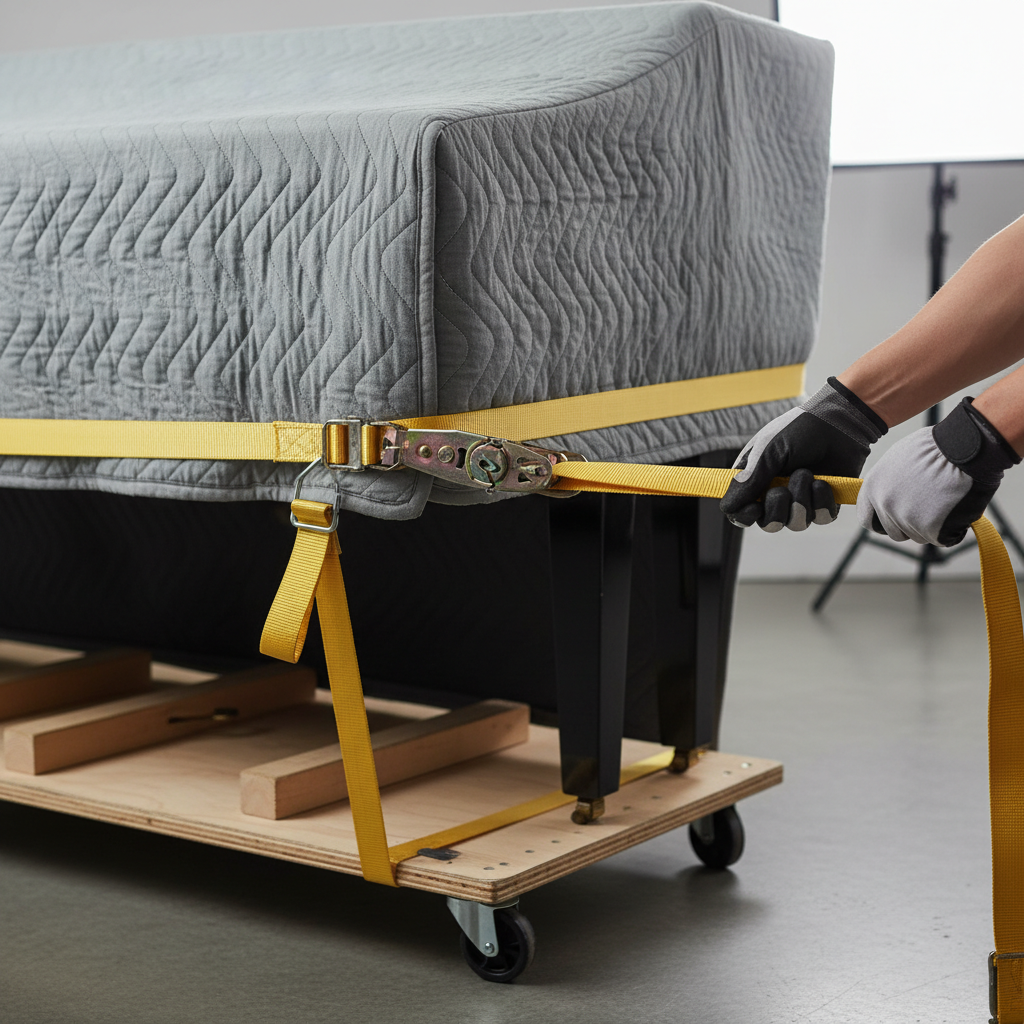
Types of Pianos and Moving Approaches
Upright, grand, and digital pianos require different strategies. Uprights stay vertical on dollies; grands are partially disassembled and moved on a skid; digital pianos usually travel in padded cartons. The approach matches the instrument’s weight, dimensions, and access constraints.
Upright pianos (spinets to full uprights)
- Typical weight: ~300–500 pounds; compact depth helps with narrow corridors.
- Method: Blanket wrap, strap, tilt to a skid or dolly; protect pedals and back posts.
- Watch-outs: Door thresholds, tight apartment turns, and elevator cab depth.
Grands (baby grand to concert grand)
- Typical weight: ~600–1,000+ pounds; length ranges 5–9 feet.
- Method: Remove lid/legs/lyre; mount the body to a skid board; control descent on ramps.
- Watch-outs: Stair angles, landing sizes, balcony hoisting decisions, and case finish.
Digital pianos and hybrid instruments
- Typical weight: ~80–150 pounds; lighter but still needs padding and cable care.
- Method: Carton or blanket wrap; strap to hand truck; avoid flex on keybed and stands.
- Watch-outs: Power supplies, detachable stands, and moisture during transit.
We match crew size, equipment, and sequence to each instrument. For example, a 5’3″ baby grand in a Ras Al Khor villa may use a three-person team with a single flight of stairs and a timed elevator at destination.
How to Choose Piano Movers in Dubai
Choose piano movers with proven specialty experience, purpose-built gear, and clear logistics planning. Look for written scopes, building coordination, protected floors and corners, and careful reassembly. Reliable providers in Dubai should also offer storage options and guidance on post-move tuning.
- Ask about specialization: How many piano moves per month? Upright vs. grand expertise?
- Confirm gear: Skid boards, hump straps, e-track trucks, floor runners, door pads.
- Review process: Survey, packing plan, building approvals, elevator bookings, and route map.
- Insurance and accountability: Documentation of coverage and clear point-of-contact.
- Aftercare: Placement, caster cups, and tuning timeline suggestions.
For background on broader relocation planning, see our professional moving services in Dubai overview and our movers and packers Dubai guide for step-by-step packing insights.
Preparation Checklist: What You Should Do Before Move Day
Prepare by clearing paths, measuring doorways, reserving elevators, protecting floors, and removing fragile items near the route. Confirm parking and loading access, label rooms, and plan the final piano position to minimize re-handling after delivery.
- Measure key passages (doors, turns, elevator cabs); note the tightest point in inches.
- Clear artwork, lamps, and furniture from the route; protect floors with runners.
- Reserve the service elevator and loading access within the building’s approved hours.
- Photograph the piano’s current condition; remove sheet music and metronomes.
- Share destination floor plan; mark final position to speed up placement.
If your move also includes furniture or décor, read our notes on furniture storage and painting to streamline staging. For whole-home moves, explore our category for movers and packers checklists.
Tools and Resources Piano Movers Use
Professionals rely on high-friction skid boards, heavy-duty straps, stair-climbers, padded blankets, and e-track trucks. These tools distribute load, control momentum, and protect finishes when maneuvering tight turns, stairs, and ramps in apartments, villas, and offices.
- Piano skid boards: Stabilize grands; provide a broad, padded surface.
- Hump/forearm straps: Balance the load; maintain upright posture during lifts.
- Dollies and stair climbers: Reduce stress on casters and steps; keep motion steady.
- Padded wraps and tape: Add shock absorption; prevent blanket slip.
- Floor protection: Runners, corner guards, and caster cups to spread weight.
- Secure trucks: E-track tie-downs; ramps with safe angles for controlled loading.
Want broader packing knowledge? Browse these packing and moving services resources with room-by-room strategies. If your plan includes an overseas relocation, review our international moving service for container coordination and customs timelines.

Pricing Factors: How Quotes Are Structured (No Prices)
Piano moving quotes are built around scope, access, risk, and timing. Movers assess instrument type, floor level, elevator or stairs, distance, packing needs, and special requirements like balcony hoists or tight turns to define crew size, equipment, and schedule.
- Instrument profile: Upright vs. grand; dimensions and weight range.
- Access details: Stairs, elevator size, corridor turns, and loading distance to the truck.
- Complexity: Disassembly/assembly for grands; need for hoists or stair climbers.
- Logistics: Elevator booking windows, parking permits, and building approvals.
- Options: Short-term storage, placement adjustments, and caster cup installation.
Transparent scoping prevents surprises. Our teams document access, building rules, and timing upfront so your move day runs on script—even in busy Dubai towers with narrow service corridors.
Best Practices for Safe Piano Moves
The safest moves follow a measured plan: confirm dimensions, protect pathways, stabilize the piano, lift with trained coordination, and secure inside the truck. Control speed on ramps, keep communication clear, and assign a single lead to sequence each step.
- Measure twice, move once: Confirm tightest passage and test-turn clearances.
- Pad early: Wrap and tape blankets before the first lift.
- Use spotters: Place them at corners, stairs, and ramp transitions.
- Secure in transit: Strap to fixed points; check for side-to-side play.
- Acclimate before tuning: Let the piano settle 24–48 hours at the new site.
For whole-home coordination beyond the instrument itself, our house shifting services in Dubai notes can help align packing, staging, and utilities.
Specialist Piano Movers vs. General Movers
Specialist piano movers bring focused training, equipment, and choreography for heavy, delicate instruments. General movers excel at full-home logistics but may lack skid boards, strap technique, or reassembly experience for grands. For higher-value pianos, choose a specialist-led team.
| Aspect | Specialist Piano Movers | General Movers |
|---|---|---|
| Training | Instrument-specific, grand disassembly | Broad household handling |
| Equipment | Skid boards, hump straps, caster cups | Standard dollies, blankets |
| Finish protection | Extra padding, case-specific wraps | General pads |
| Complex access | Stair climbers, balcony strategies | Basic ramp methods |
| Reassembly | Precise leg/lyre/lid setup | Limited piano reassembly |
Our crews handle both full-home moves and instrument-specific sequences, so your schedule, access constraints, and finish standards all get the attention they deserve.
Case Studies: Dubai Moves We’ve Completed
Real-world examples show how planning avoids risk. From villas to high-rises, timing elevators, padding corridors, and sequencing furniture around the instrument keep moves smooth. These snapshots from Ras Al Khor and greater Dubai illustrate what works.
Villa to apartment: baby grand on a tight schedule
- Three-person team; removed lid, legs, and lyre; mounted to skid board.
- Pre-booked service elevator; used floor runners and door pads along a 25-yard corridor.
- Placed on caster cups; client scheduled tuning 36 hours later for stable pitch.
Office relocation: upright piano in a shared building
- Two-person team with a third as spotter; blanket wrap and strap to dolly.
- Coordinated loading dock window; minimized door-open time in hot weather.
- Final placement near an interior wall to reduce temperature swings.
International relocation support
- Padded export prep for an upright headed overseas; desiccant pack inside cover.
- Secured within liftvan; coordinated with our international moving service for onward transit.
- Provided a tuning interval guideline post-arrival after climate acclimation.
We align instrument handling with household logistics so your entire move timeline stays on track.
Storage, Placement, and Aftercare
If timing gaps exist, choose clean, dry storage and keep the piano wrapped. At destination, place the instrument on caster cups, away from vents and direct sun, and schedule tuning after 24–48 hours to allow strings and soundboard to stabilize.
- Short-term storage: Keep wrapped; add moisture control; avoid direct airflow from AC.
- Placement: Favor interior walls; maintain stable temperature and humidity.
- Aftercare: Light cleaning only; schedule tuning and any minor regulation checks.
For general packing and home-readiness tips that complement piano care, explore our movers and packers overview. If plumbing appliances are part of your move-out checklist, our home plumbing prep notes can help you plan safe disconnects before move day.
FAQ: Piano Movers in Dubai
These FAQs answer the most common questions about preparing, timing, and aftercare for piano moves in Dubai. Use them to plan access, protect finishes, and schedule tuning after the instrument acclimates to its new space.
How soon should I tune the piano after a move?
Let the instrument acclimate to the new environment for 24–48 hours, then schedule tuning. This helps the soundboard and strings settle after temperature and humidity changes common in Dubai.
Can a piano go up or down stairs safely?
Yes—trained crews use straps, dollies, and measured pacing to manage weight and angles. They assign spotters at turns and landings and may use stair-climbers for added control.
Do grand pianos always need disassembly?
Most grand moves remove the lid, legs, and lyre to protect the case and balance the load on a skid board. It improves control through doors, corridors, and elevators and reduces finish risk.
What should I do the day before the movers arrive?
Clear paths, reserve the elevator, remove nearby décor, and share the final placement plan. Photograph the piano’s condition and keep pets and children away from work areas during the move.
Tools, Resources, and Next Steps
Use this checklist to finalize your plan: confirm access, book the elevator, prepare floors, brief the movers, and decide on storage or tuning timing. With a clear route and a specialist-led crew, your piano arrives safely and settles quickly in its new space.
- Confirm date, crew window, and building approvals with your mover.
- Measure tightest passage; share photos or a simple floor plan.
- Decide on short-term storage if handover dates don’t align.
- Place caster cups and a floor mat at the destination spot.
- Schedule tuning 24–48 hours post-delivery.
For more planning context, scan these best movers and packers insights written for Dubai homes and offices.
Need help planning a piano move? Our Ras Al Khor team coordinates surveys, elevator bookings, packing, and placement. We can bundle storage and full-home logistics so your schedule stays intact.
Request a callback at Service Zone UAE to align dates, access, and aftercare.
Key Takeaways
Piano movers safeguard weight, finish, and action using plans, padding, and purpose-built tools. Measure access, reserve elevators, and place caster cups before delivery. In Dubai, a coordinated team keeps timing tight so your instrument stays protected from first lift to final note.
- Use specialist crews for heavy, delicate instruments—especially grands.
- Protect floors and corners; strap and stabilize before any lift.
- Book service elevators and loading access early in Dubai buildings.
- Acclimate 24–48 hours before tuning for stable pitch.
- Consider short-term storage if handovers don’t align.
Ready when you are. Book a piano survey with our Ras Al Khor team to confirm measurements, plan the route, and lock your elevator window. Contact Service Zone UAE to get started.